
The problem is a classic one, simple to see, and basically impossible to avoid.
You start digging into a project, trying to find something you’re sure is there, and realize you need to bring order to these other things that are tied to yet another thing. Of course, all of the things are fascinating in their own way.
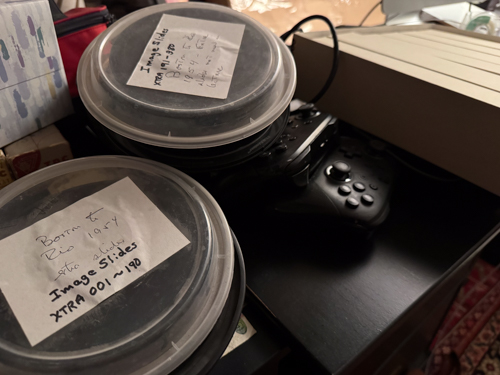
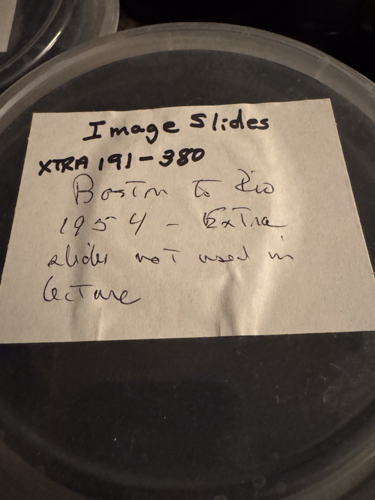
The attic has surfaced as a trove of projects—they just need a bit of attention. A little organization. Maybe it’s time to pull them out of their original plastic boxes and organize them in filing cabinets? SentrySafe Black Fireproof Document Boxes? No, no, the goal isn’t just fighting back against the Third Law of Thermodynamics. It’s publishing a story.
As you dig in, you still have to think about how to work with all of this stuff.
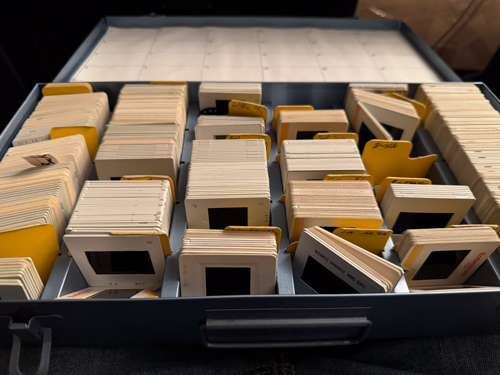
The Epson 4990 flatbed comes out and reminds you how long it takes to do negatives and slides that way—and how hard it is to get really good ones. Maybe getting access to ICP’s Hasselblad X5 or Nikon CoolScan? Maybe only for the images that will be used in print. But there are also tons of services like ScanCafe or DiJiFi in Brooklyn. So many choices. Going to need to ask folks at work. But look, here’s the FilmBox app and videos of people shooting their slides with a DSLR.
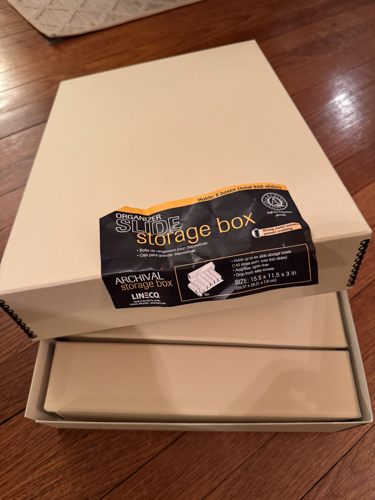
Amazon can send you a light board in two days for $20. And slide storage boxes. And more negative sleeves.
After a few hours figuring out how to invert negative scans into positive contact sheets, you realize you need to switch from Lightroom CC to Lightroom Classic. Then you research scanning services versus DSLR rigs—and can clearly see the rabbit hole of how to organize all of these files.
Of course, I also have this blog. I want to get a better cadence of posts, but I’ve completely ignored working through the plugins and publishing process. No surprise Lightroom Classic has some amazing image management and exporting tools. But should I get an OpenAI API key to do grammar checks on my posts? No, no, overkill.
Great way to spend a long holiday week.

Leave a Reply