
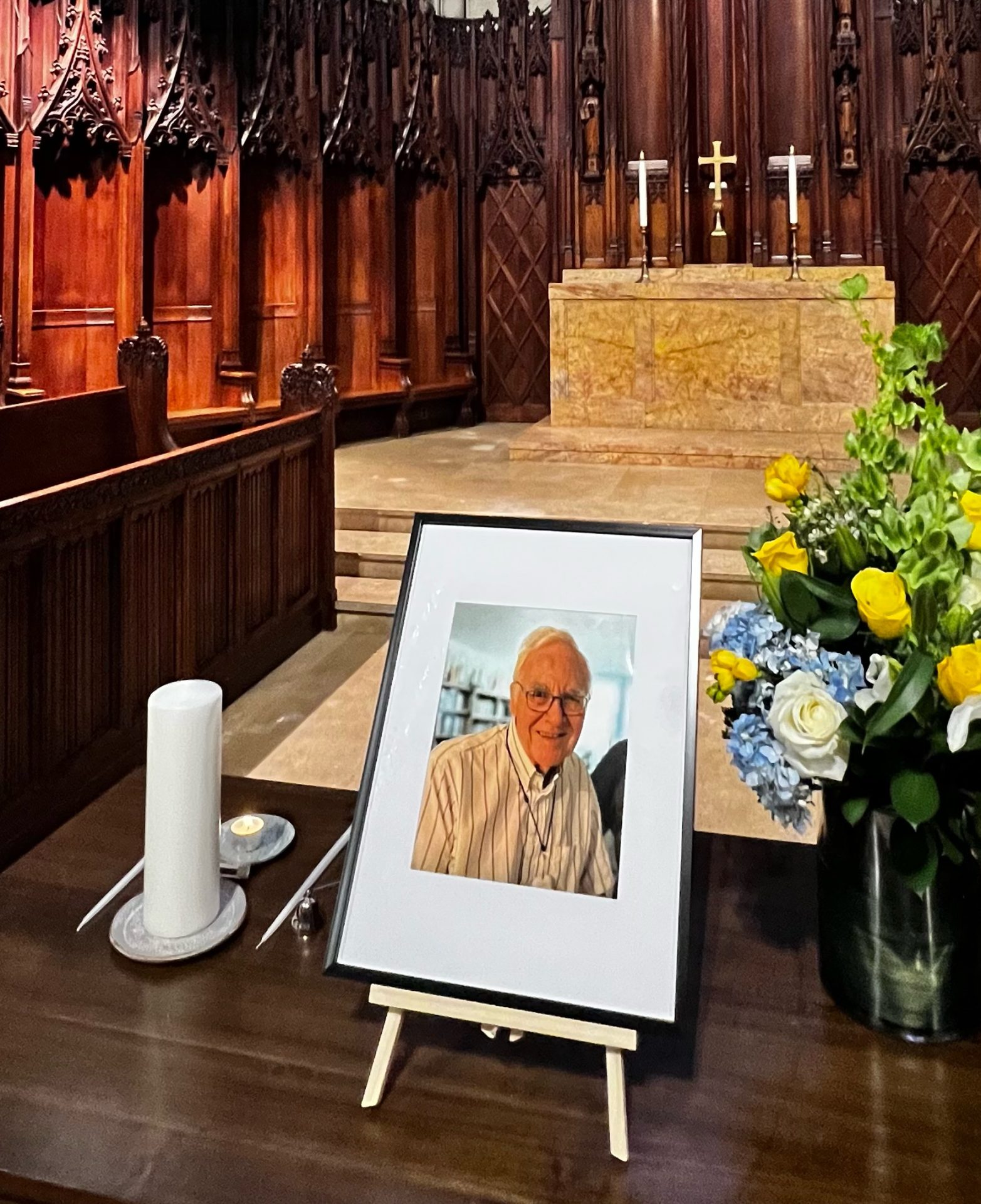
I’ve been a bit distracted lately with work and organizing a memorial for my Uncle, Herbert Barry III. This is probably better posted on my personal blog which is buried inside Altacircle.com somewhere, but since the eulogy I wrote is really about the past inspiring the future, I’m going to post it here. I should also say that Uncle Herb inspired my first published book and first photo book with A Professor’s Perspective.
It really was an amazing memorial. Held in the Heinz Memorial Chapel it was a Unitarian service with lots of reading from family, and 3 or 4 impromptu tributes from former colleagues and friends.
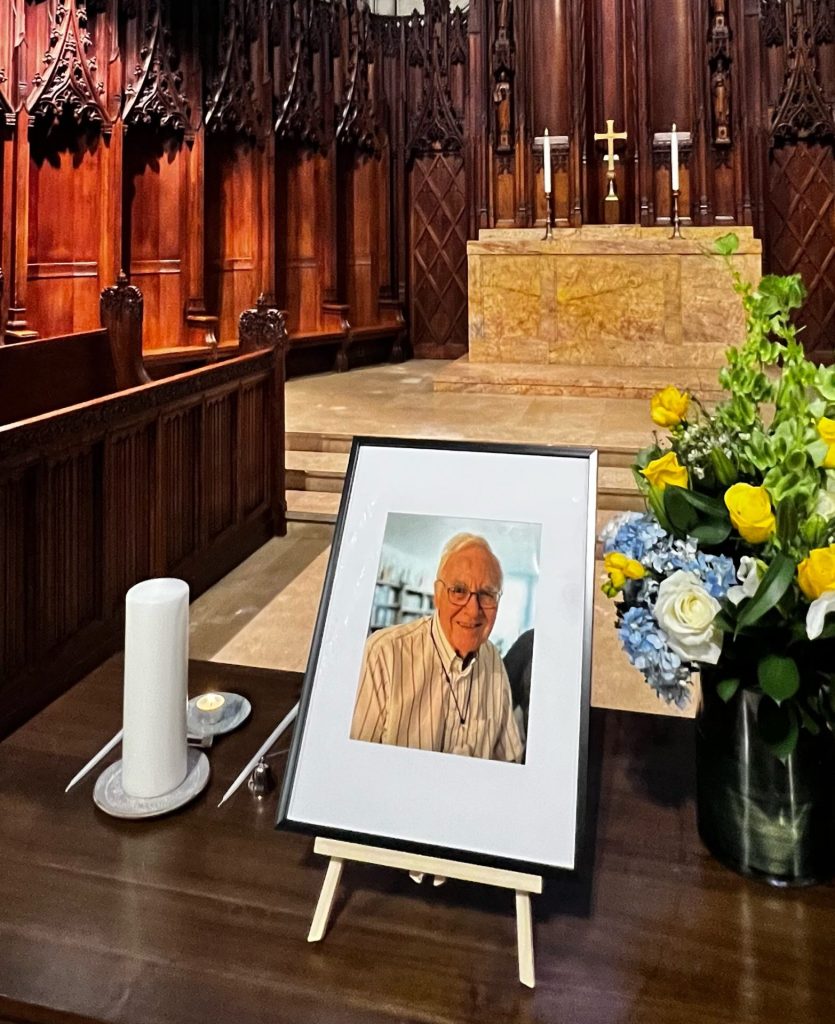
Dr. Herbert Barry III: Professor, Research Psychologist, 1930–2025
Good morning, everyone.
We’re here today to celebrate the remarkable life of Herbert Barry III. Many knew him as Dr. Barry, but to me, he was Uncle Herb—the professor that came to all of the holidays wearing a gray suit, carrying books. and scribbling notes on old computer punch cards.
There has been a lot of talk recently about the 80 column punch cards. I think he used them because he had boxes of them from the early days when a line of code was literally punched into a card. He was an early user of computers to analyze big datasets. He was not a wasteful man; he would have used them.
More likely it was because they fit really well in a suit pocket right next to his pens and the folded articles that he loved to hand out. The ones about US presidents or the statistical implications of birth order, or naming. Or the implication of birth order and naming on the probability of becoming President.
Maybe it was just that they made great bookmarks. Just last night Thommy said that when he was helping Lucy, Cyn and Nathan clear out his apartment there were a lot of books – there were bookcases lining the walls, books on 2 feet high covering card tables and more books under the tables , and nearly everyone had a computer punch card marking a page or passage.
John F. Kennedy said “Every accomplishment starts with the decision to try.”
There is no question Uncle Herb frequently took the decision to try. He received a B.A. in Social Relations from Harvard University in 1952, graduated Phi Beta Kappa, and then went to that rival school, Yale. There he received his M.S. and Ph.D. in just five years. I have to admit I asked ChatGPT if five years was a short time to do a masters and phd in the 1950s, and it said yes, that would require “an exceptionally strong academic background and focus.” Clearly the AI knew Uncle Herb.
He was appointed to the School of Pharmacy here at the University of Pittsburgh in 1963, and was made full professor in 1970, the same year he published his first book, Actions of Alcohol. He later was given an adjunct appointment to the school of Anthropology after publishing a second book, in 1991, called Adolescence: An Anthropological Inquiry. That book looked at data from 186 societies outside of the industrial West to understand universal traits of people entering adulthood. I believe that is also when Uncle Herb had an office in the Cathedral of Learning. He was very proud of that and took care to point it out when he gave me a tour of the campus a good 15 years after he “retired” as Professor Emeritus in 2001.
John Adams reminded us, “Old minds are like old horses; you must exercise them if you wish to keep them in working order.“
He spoke statistics fluently, and it was his superpower.
Across his career, he wrote over 250 academic articles, and was editor of the Journal of Psychopharmacology from 1974 to 1991. The director that followed him, Klaus Miczek, said often that the reason he wrote detailed comments when he reviewed a paper was because he was following the example set by his predecessor, Well after “retirement” he was still publishing in journals like Clio’s Pysyche and collaborating with Aylene Harper, who is here today, for article in the Journal of Onomastics which focused on the study of names.
In 2021, at 91, we decided to publish a book on the US Presidents using all of those articles he had written over the years. We collected them from all of the family, but of course Uncle Herb insisted we have one for each president so in his ninties we took on writing 12 or so new ones. Credit to Lucy who, on top of everything else she did managing Herb’s finances and care, took on fact checking and reviewing all of those essays. The result was “A Professors Perspective” in 2023. In 2023, he was also given a Lifetime Achievement award by the Psychohistory Forum which is the publisher of Clio’s Psyche.
Abraham Lincoln said “In the end, it’s not the years in your life that count. It’s the life in your years.”
I believe Uncle Herb lived such a long and full life because he balanced the three areas that are critical to longevity and happiness.
The first was of course his academics. He was as curious at 90 as he was at 12, and was always looking to publish, always pushing to speak at conferences. It was a purpose and intellectual ambition.
The second was exercise. He swam daily and played tennis. He walked to campus. When he came to Ames Hill in Vermont at the age of 85, he nearly gave us a collective heart attack when he strode down the dock and dove in headfirst to swim out to the raft. We shouldn’t have been worried. He basked there in the sun with a smile on his face just like he did when he was twelve.
The third is his personal relationships. While he never married, he nearly always had a partner. For over twenty years that partner was Helene Borke, a clinical psychologist at Carnegie Mellon. They traveled to conferences together and spent time with both families regularly. When Helene became sick, Herb visited her daily and even bought the meal plan at her assisted living facility.
For a man that would probably consider himself an introvert, he worked hard to develop and maintain his social relationships. Only three years after coming to Pittsburgh, he was president of the Chess club. For many years he volunteered as a poll worker here in Oakland. In setting up this Memorial we found pictures of his 70th birthday — he and Helene hosted a big crowd with speeches, a lively dinner and lots of laughter.
He was a guy that asked questions and really listened and thought about your answers.
Focused, curious, committed. I would only add one other word today and that is modest. He was proud of his achievements and kept his tennis and chess trophies, but he was also incredibly modest. After a lifetime of academic and financial achievement, he simply said he had “slightly better-than-average success.”
Today, we remember Herb not just as a scholar, but as a thoughtful and truly curious soul whose legacy reminds us to stay curious, engage passionately, and cherish deeply the connections we make along the way. And remember to try. You can be amazed at what you can achieve.
Thank you.
15 March 2025
Leave a Reply